How to Make DIY Toys at Home for Kids Without Spending Much | Motorized Wooden Jeep
أغسطس 09, 2026


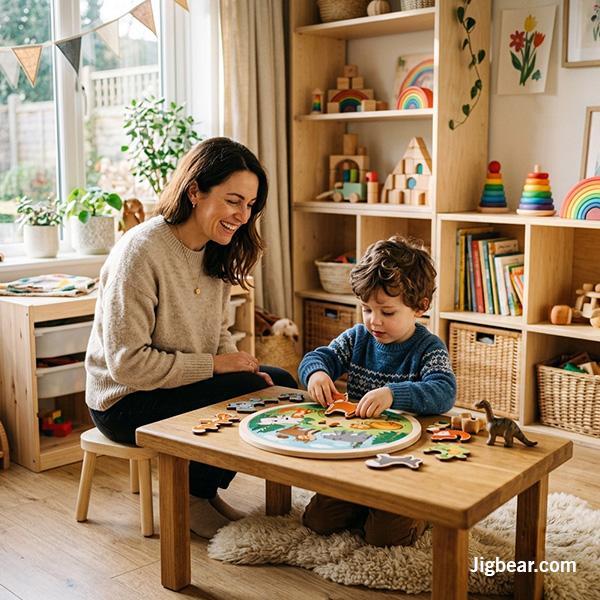
Every time a child picks up a puzzle piece, matches a shape, or explores a wooden map, something remarkable happens inside the brain.
Neuroscientists have shown that children build stronger neural connections through active, hands-on experiences. Unlike passive entertainment, handmade educational toys require children to think, make decisions, solve problems, and adapt their strategies. This kind of engagement activates multiple areas of the brain simultaneously.
When children play with handmade wooden toys, they naturally develop:
Because handmade toys don't provide instant answers, children learn through exploration. Every small success strengthens confidence and encourages them to keep learning.
For young children, learning isn't something that only happens in a classroom—it happens every time they play with purpose.
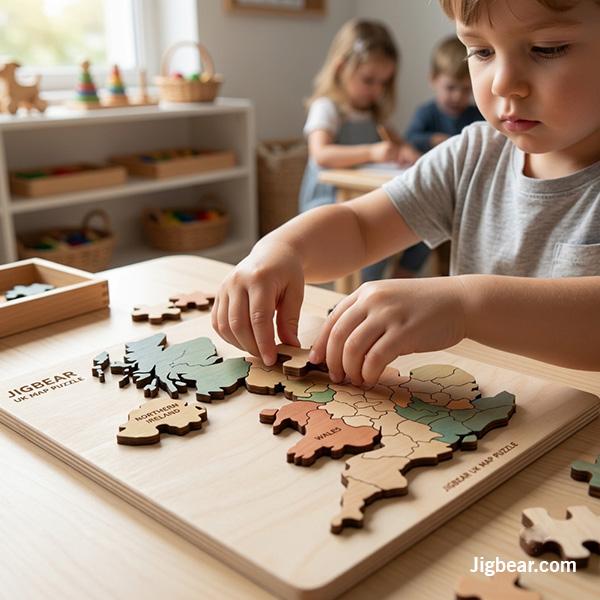
One of the greatest strengths of handmade toys is that they are open-ended.
Open-ended toys don't have a single "correct" way to play. Instead, they encourage children to invent new games, ask questions, and create their own learning experiences.
For example, a handmade wooden world map puzzle can become:
An alphabet puzzle can become:
This flexibility keeps children engaged far longer than many electronic toys, which often become repetitive after the initial excitement wears off.
Open-ended play also helps children become adaptable thinkers—an essential skill for the future.
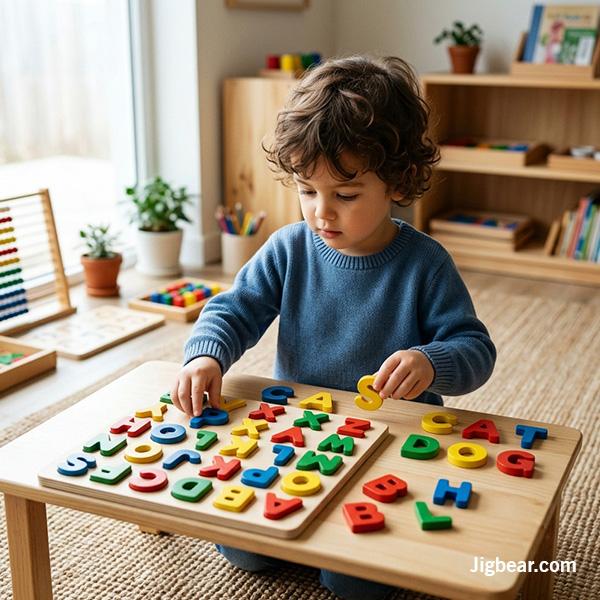
Children encounter challenges constantly as they grow.
How do I fit this puzzle piece?
Why doesn't this shape match?
Where does this country belong?
What letter comes next?
These small challenges teach children an important life lesson:
Problems can be solved through patience and persistence.
Handmade puzzles encourage children to:
Unlike many electronic toys that immediately provide rewards, handmade educational toys encourage children to experience the satisfaction of discovering solutions independently.
This builds resilience—a quality that supports learning throughout life.
The Montessori approach to education is built on one simple belief:
Children learn best by doing.
Rather than sitting quietly while adults provide information, children explore, experiment, and discover knowledge independently.
Handmade toys naturally align with Montessori principles because they encourage:
Many Montessori classrooms feature wooden puzzles, practical life materials, alphabet boards, number activities, and geography puzzles because these resources allow children to learn at their own pace.
A handmade toy doesn't rush a child.
It patiently waits for the child to explore.
That respect for the child's learning journey is one of the reasons Montessori-inspired toys remain popular with parents around the world.
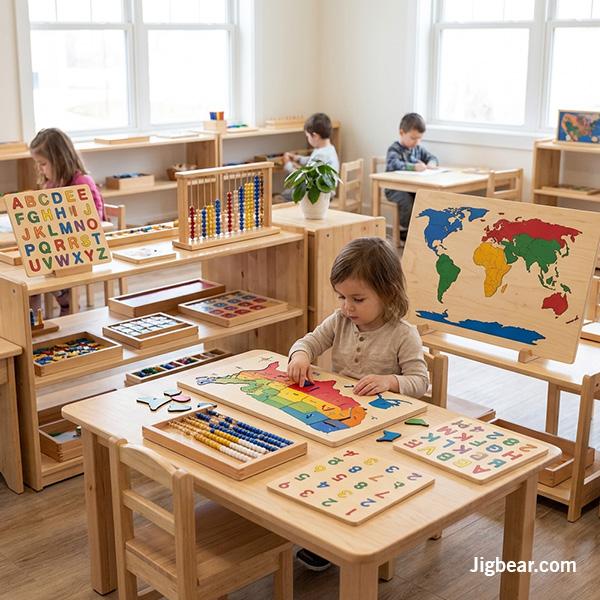
World map puzzles are among the most versatile educational toys available.
They introduce children to geography in a way that feels exciting rather than overwhelming.
Instead of memorizing country names from a textbook, children physically place continents, oceans, and countries into position.
As they play, they begin asking meaningful questions:
These conversations transform simple playtime into rich learning experiences.
A handmade wooden map puzzle encourages curiosity about the world while strengthening memory, spatial reasoning, and cultural awareness.
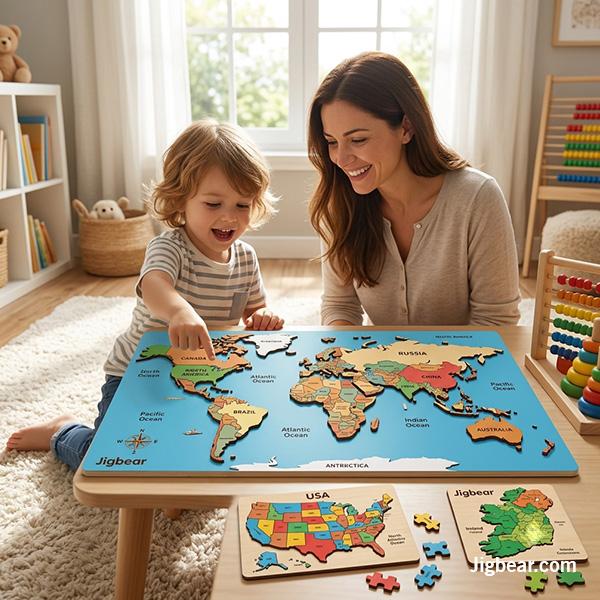
Educational benefits are only part of the story.
Handmade toys also help children develop emotionally.
When children complete a challenging puzzle, they experience:
When they play with siblings or parents, they also learn:
Unlike fast-paced electronic games that often reward speed, handmade toys reward persistence.
Children begin to understand that meaningful achievements take time.
This mindset supports healthy emotional development both at home and in school.
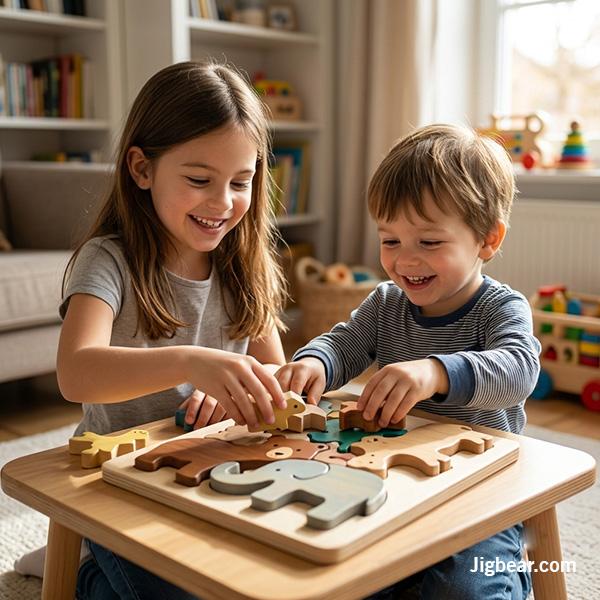
Today's parents increasingly want products that align with their family values.
Choosing eco-friendly handmade toys isn't just about reducing plastic waste—it's also an opportunity to teach children about caring for the environment.
When children grow up surrounded by durable wooden toys instead of disposable plastic products, they begin to appreciate:
These lessons extend beyond playtime and help shape thoughtful, environmentally conscious adults.
For many families, eco-friendly toys represent both an educational choice and a lifestyle choice.
Many parents report the same surprising experience after introducing handmade toys into their homes.
Their children:
These changes don't happen because handmade toys are magical.
They happen because handmade toys encourage children to become active participants in their own learning.
The child—not the toy—becomes the source of creativity.
That simple shift creates deeper, more meaningful play experiences.

Discover how handmade educational toys help children build imagination, confidence, creativity, problem-solvin...
Discover the hidden benefits of eco-friendly handmade toys for kids. Learn how wooden puzzles and educational...
يوليو 22, 2026
Cookie preferences